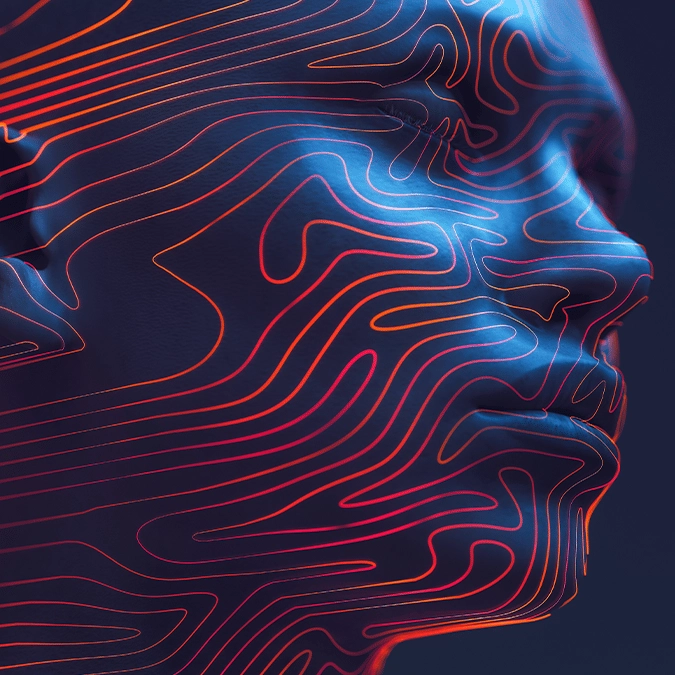
Scientists eerily predict what humans will look like in 1,000 years and the differences are shocking


1,000 years is an incredibly long period of time, as it's over four times older than America as we know it, yet some scientists have offered their own predictions as to what humans will look like in the distant future.
Often predictions give heed to disasters and world-changing events that are on their way in the near future, yet it's often just as fascinating to look all the way forward into a world that seems so far away right now.
Looking back even a few hundred years allows us to see the dramatic changes that humans have undergone, and researchers studying the ancient origins of our species are still finding new discoveries to this day.
However, what would happen if instead of studying the past you looked into the future? That's exactly what scientists have done to see their own projections of the human race, and the results are eerily fascinating.
Advert

As reported by the Daily Mail, evolutionary geneticist Professor Mark Thomas has suggested that people might get shorter over the next 1,000 years, but at the same time they'll also get more attractive.
Professor Thomas has linked early sexual maturity to shorter heights, as while fecundity (otherwise known as the ability to produce an abundance of offspring) is increased, there's a higher likelihood that your children are on the smaller side.
"This is one of the arguments that's been put forward to explain why you get pygmy populations in many places around the world," Professor Thomas explains, adding that "their lives are relatively short because it's a tough life in the rainforest, so they've traded off sexual maturation against physical health."
On the flip side, he also argues that women have become increasingly able to choose their own sexual partners, which could in theory lead to a more attractive populace over time.
"Thankfully we're moving into a world where females do the choosing, and they're going to choose males who they like for one reason or another," outlines Professor Thomas, continuing on to indicate that "it might be for brains, success, because they look good, or look muscly but as there's more female choice you would expect those traits to increase."

Dr. Jason Hodgson has also illustrated that humans are likely to have darker skin in 1,000 years time as interracial relationships have become increasingly more common.
"In terms of appearance," Dr. Hodgson explains, "you would then see that people are more intermediate. If we think about one of the few traits that varies by population - skin color - most people would be a bit brown, for example."
1,000 years is still a very long time though, and predictions like these could be dramatically wrong as the world changes. After all, an asteroid could hit the Earth and destroy everything if we're unlucky.