Astrobiologist says we might have found life on Mars 50 years ago but accidentally killed it


Scientists believe we may have discovered life on Mars 50 years ago - but accidentally destroyed it in the process.
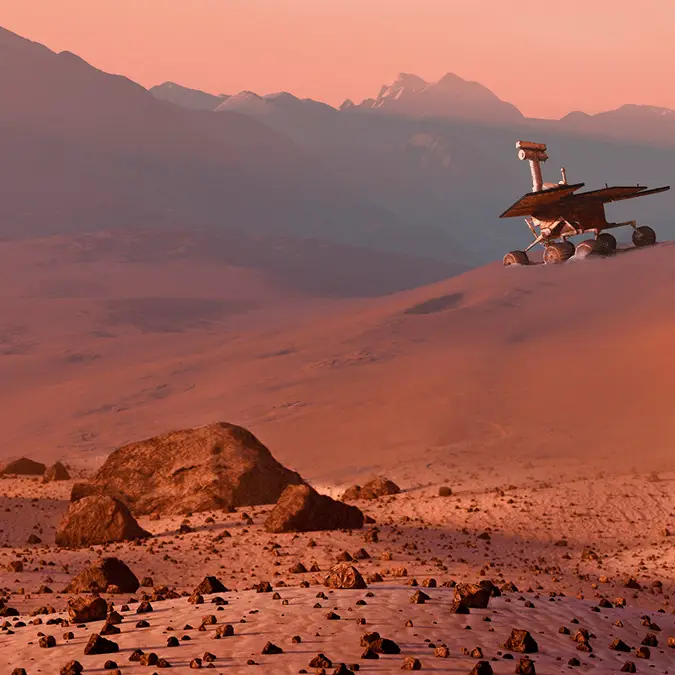
NASA sent two Viking landers to the Red Planet back in the 1970s hoping to find signs of life.
Now, planetary habitability and astrobiology professor Dirk Schulze-Makuch claims the landers did actually find evidence of microbial life forms on Mars. But their methods of doing so may have accidentally destroyed them in the process.
Advert
“I dropped a suggestion that some people surely will find provocative: that we already did find life on Mars nearly 50 years ago — but that we inadvertently killed it,” said Schulze-Makuch, who's also a former fellow at NASA’s Goddard Space Flight Center.
The Viking landers touched down on Mars in 1976 with their cameras and NASA space probes which supplied both imaging technology and instruments to test for life.
They ran several biological tests to directly search for life and it appeared that the results they gathered were contradictory, leaving researchers scratching their heads for decades.
One test detected trace amounts of chlorinated organic materials, which at the time were dismissed as Earthly contamination.
Nonetheless, they were inconclusive evidence of life.
But thanks to later missions like the Phoenix lander and the Curiosity and Perseverance rovers, scientists now know those chlorinated organics are native to Mars.
The thing is, Schulze-Makuch believes that the tests themselves may have destroyed any essence of microbial life - possibly explaining why the results were so confusing.
Another test involved adding water to samples of Martian soil to see if it triggered signs of metabolism or photosynthesis.
This was under the assumption that life on Mars would behave like life on Earth and require water to survive.
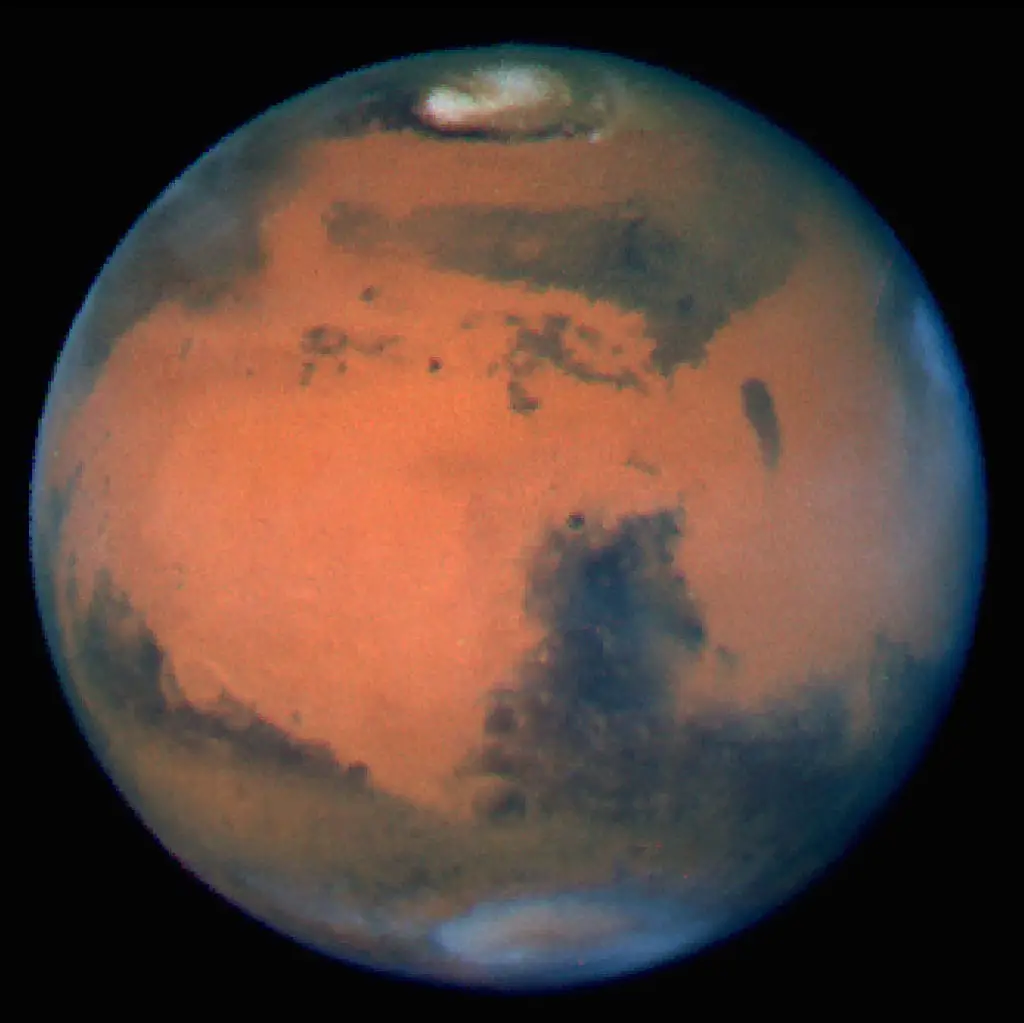
But they were wrong. Mars is completely different to Earth in that it's an incredibly arid planet and any potential microbes living there have likely adapted to that extreme dryness.
Therefore, the introduction to water may have ultimately drowned the organic microbes, according to the scientist.
“It would be as if an alien spaceship were to find you wandering half-dead in the desert, and your would-be saviors decide, ‘Humans need water. Let’s put the human in the middle of the ocean to save it!'” Schulze-Makuch explained.
Interestingly, the test’s dry control run - where no water was added -showed stronger evidence of life than the wet sample.
Furthermore, Schulze-Makuch explains that if Martian microbes contained hydrogen peroxide, the heat from the experiment could have killed them.
Not only that, the heat might have also caused the hydrogen peroxide to react with nearby organic materials to create carbon dioxide- which is likely what the Viking instruments picked up.