uniladtech homepage
  • News
    • Tech News
    • AI
  • Gadgets
    • Apple
    • iPhone
  • Gaming
    • Playstation
    • Xbox
  • Science
    • News
    • Space
  • Streaming
    • Netflix
  • Vehicles
    • Car News
  • Social Media
    • WhatsApp
    • YouTube
  • Advertise
  • Terms
  • Privacy & Cookies
  • LADbible Group
  • LADbible
  • UNILAD
  • SPORTbible
  • GAMINGbible
  • Tyla
  • FOODbible
  • License Our Content
  • About Us & Contact
  • Jobs
  • Latest
  • Archive
  • Topics A-Z
  • Authors
Facebook
Instagram
X
TikTok
Snapchat
WhatsApp
Submit Your Content
Mind-blowing study suggests everything you see is actually from 15 seconds in the past
Home>Science>News
Published 12:53 4 Jul 2025 GMT+1

Mind-blowing study suggests everything you see is actually from 15 seconds in the past

Studies reveal that your brain is tricking you

Harry Boulton

Harry Boulton

google discoverFollow us on Google Discover
Featured Image Credit: SEAN GLADWELL / Getty
Science
Discovery

Advert

Advert

Advert

Our eyes and sense of sight are one of the most vital tools at our disposal as humans, yet what we actually perceive could be as far away as 15 seconds into the past according to a mind-blowing new study.

The human body is understandably complex and there are many processes that we go through every single day that scientists still struggle to explain how they actually work.

While you'd be forgiven for thinking that your eyes provide a simple vector for your brain to receive information in front of you, the reality of how our vision works is actually far more complex.

You might already be aware that the lens inside your eye projects an 'inverted' image onto your retina, but what you end up actually seeing is more likely an amalgamation of past images in order to create a sense of stability in your vision.

How are we seeing things in the past?

As reported by Popular Mechanics, a 2022 study in the Science Advances journal suggests that everything that we perceive through our eyes is a collection of past 'images' processed by our brain in order to create a steady and stable view of the world.

Advert
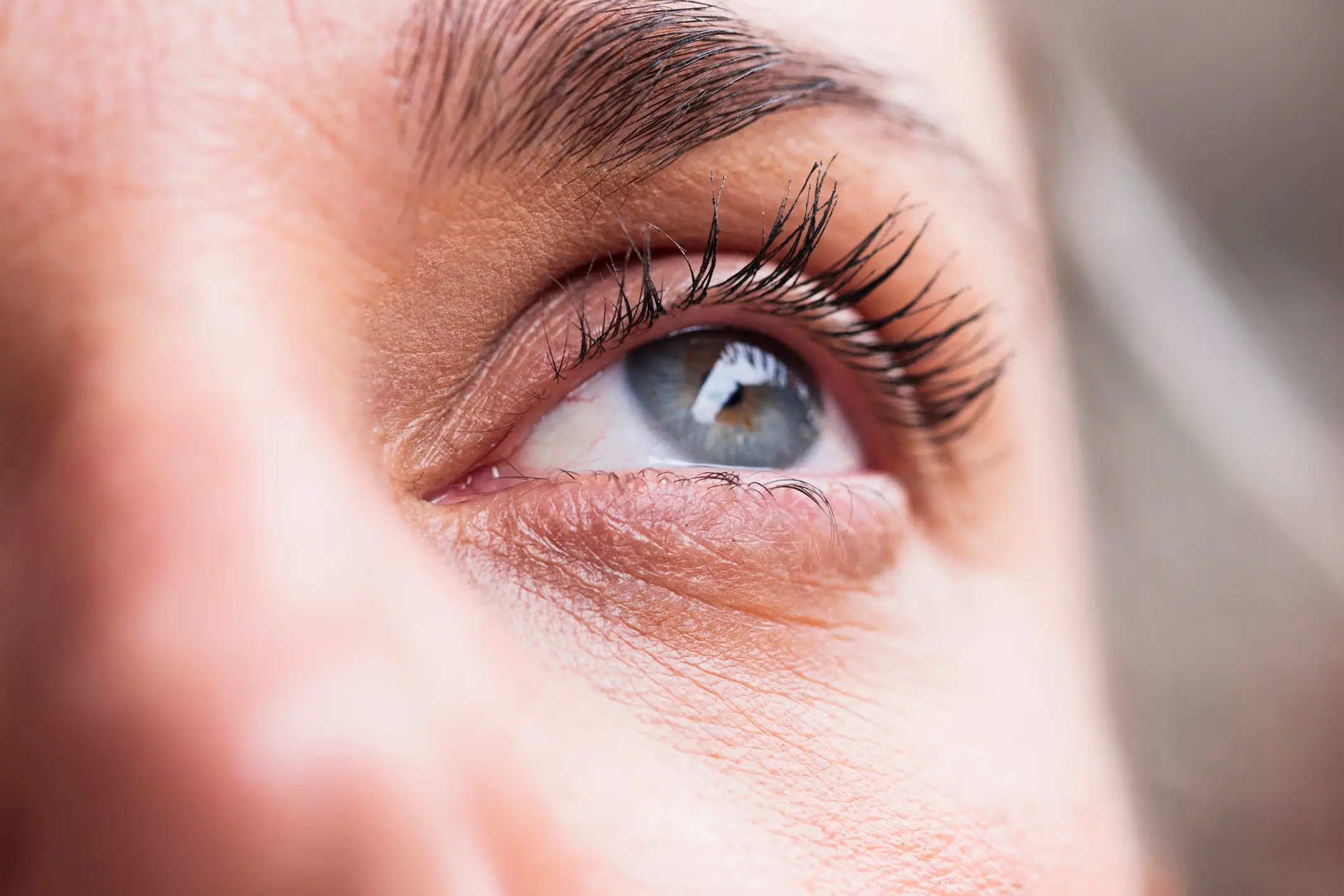
Your brain and eyes are tricking you by drawing from data that could be as old as 15 seconds (Getty Stock)

"Despite a noisy and ever-changing visual world, our perceptual experience seems remarkably stable over time. How does our visual system achieve this apparent stability?" the study questions.

What scientists have proposed is a 'previously unknown visual illusion' triggered by the brain to make what should be (and is in reality) a far more jittery and visually cluttered sense of vision appear clean through our eyes.

"A continuously seen physically changing object can be misperceived as unchanging," the study outlines, suggesting that the brain could be pulling and merging data from as far back as 15 seconds ago in order to provide something that we can understand.

"We propose that, because of an underlying active mechanism of serial dependence, the representation of the object is continuously merged over time, and the consequence is an illusory stability in which object appearance is biased towards the past."
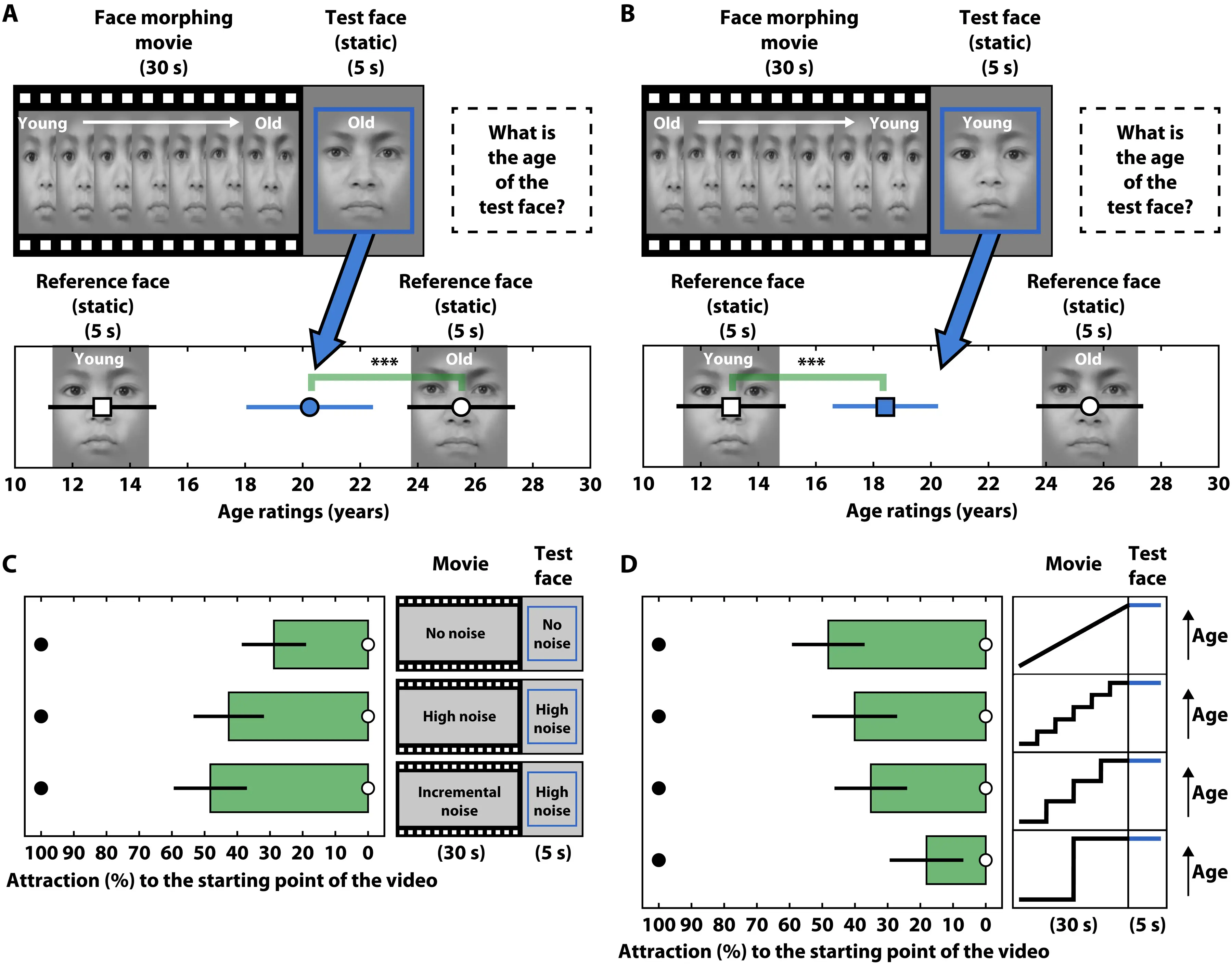
The study conducted experiments which show how our brain merges past images, tricking our eyes into retaining stability (Anthony Cerniello)

Think of how you would focus on a moving object far away. When you're looking at it it remains clear in your vision, even though it's not static, and you could even move your own head and keep it relatively in view.

What the study proposes is that this is possible thanks to your brain pulling data from the past of what the object 'should' look like and essentially playing a trick on you.

This causes objects to appear as if they are not changing over time when in actuality they are, and the study itself represents a mind-blowing breakthrough in how we understand not only our eyes and vision, but also how they interact with our cognitive functions.

Choose your content:

3 hours ago
5 hours ago
6 hours ago
a day ago
  • Sion Touhig / Staff via Getty
    3 hours ago

    Stephen Hawking agreed with unsettling alien theory which could answer huge question

    This explains one of the biggest questions within the alien-hunting community

    Science
  • YouTube/I Fix Hearts by Dr. Ovadia
    5 hours ago

    Everything that happens to your body when you eat refined carbs as doctor warns they're ‘destroying your heart'

    Refined carbs are found in some of the most commonly eaten foods

    Science
  • O2O Creative / Getty
    6 hours ago

    Uncover where your home was located 320,000,000 years ago using this online tool

    You can now see where your town existed during the age of Pangaea

    Science
  • YouTube/@TheInfographicsShow
    a day ago

    Fascinating simulation reveals everything that happens to your body when you take steroids

    There is a type of steroid that is considered dangerous to the human body

    Science
  • Mind-blowing simulation reveals what actually happens to sperm if not ejaculated
  • 15 mind-blowing events that you'll never get to see in your lifetime
  • New study suggests true origins of Covid-19 might not be what we thought
  • See everything the Artemis 2 astronauts are seeing right now with mind-blowing live feed