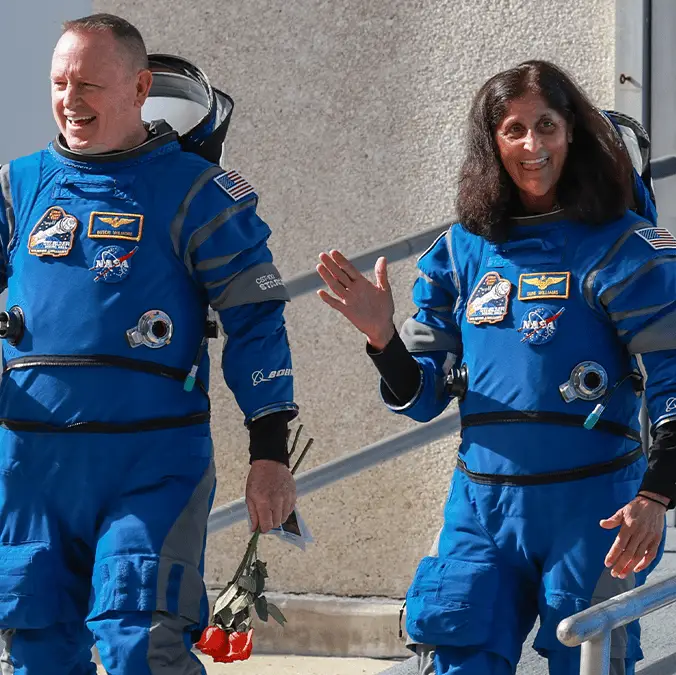
Featured Image Credit: Joe Raedle / Staff / Getty
While it might not seem too strange that it's taking NASA 17 hours to return stranded astronauts Suni Williams and Butch Wilmore back to Earth, comparisons to a previous Russian Soyuz capsule that took just 3.5 hours for the 'same' journey have many asking questions.
What's almost guaranteed though is that the 17-hour journey will go by in a flash for Williams and Wilmore, who have been 'stuck' on board the International Space Station (ISS) for 285 days now, despite their expected stay being just eight days.
After technical issues arose with both their Boeing Starliner spacecraft and the SpaceX rocket that was scheduled to bring them back, the pair are finally on their way back home after the unexpected delay in space.
Advert
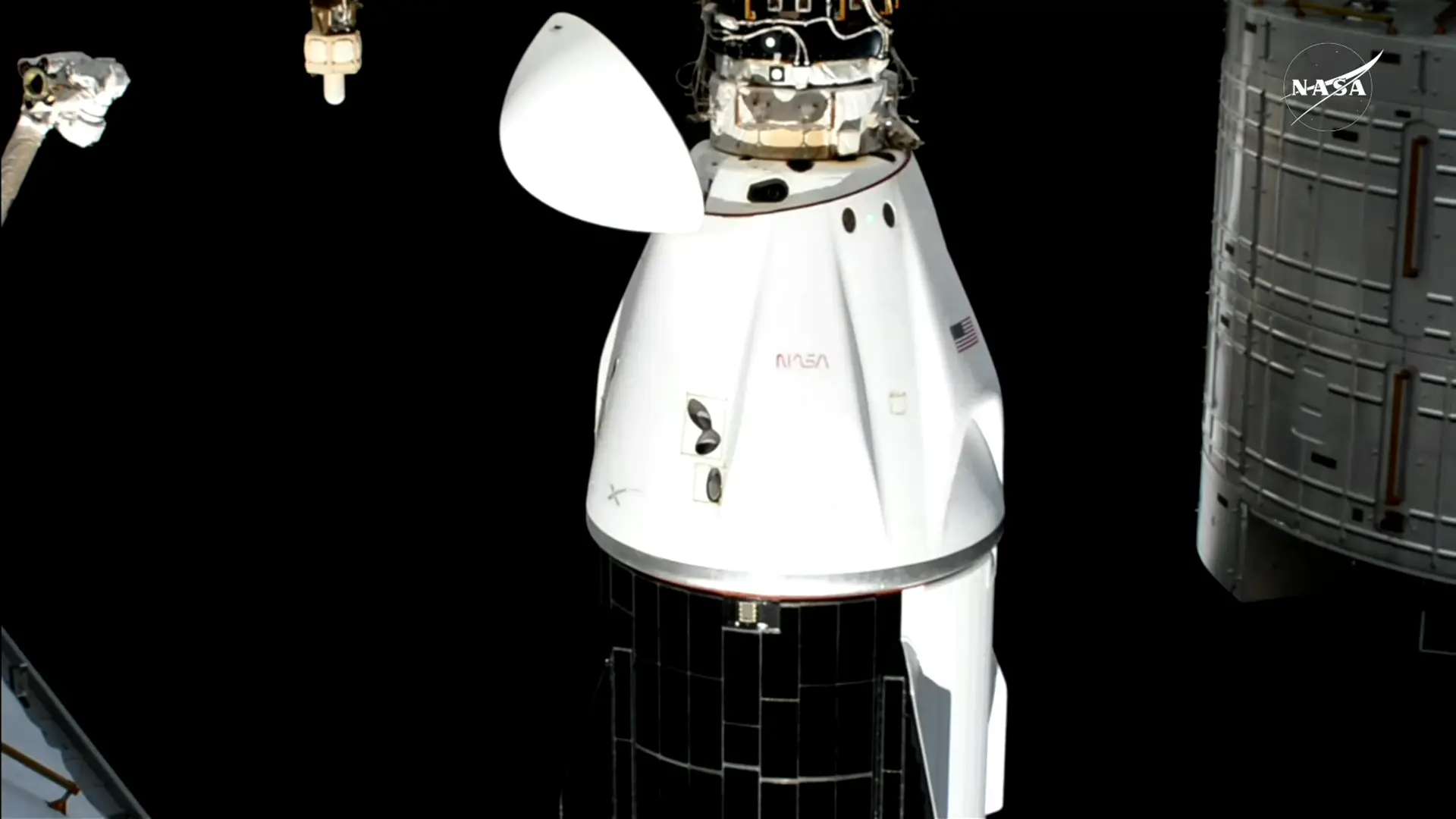
SpaceX's Crew Dragon spacecraft departed from the ISS at 1:05 a.m. EST today, after the Crew-10 astronauts successfully completed their handover process, allowing the stranded pair to make their way back to Earth.
NASA have officially confirmed the time that they're expected to splash into the ocean off the coast of Florida, and it's just a few minutes shy of 17 hours.
However, as reported by the Economic Times, a Russian Soyuz capsule last year managed to do what is essentially the same journey in just 3.5 hours, cutting down the travel time by roughly 80%, but the reason behind the wild difference is fascinating.
Returning from the International Space Station - or frankly anywhere in space - is a complicated and dangerous process, and thus a number of different variables have to be considered by scientists behind the missions.
First and foremost, their SpaceX craft must slow down enough from the ISS' 28,000 km/h orbit of the Earth in order to drop out of it, but this becomes challenging when you're trying to land in a very specific place.
On top of this, the ideal landing spots can be required to change at any moment due to shifts in weather, ocean currents, and the location of recovery ships, and thus rushing into things is probably the worst thing you can do to ensure the safety of the astronauts on board.
Spacecrafts also experience extreme temperatures as they break through the atmosphere which are caused by air resistance, so the flights are slowed down through the use of parachutes to ensure that things don't get too hot.
Once everything has gone to plan the spacecraft is then ready to land into the sea, but in the case of the Soyuz capsule it took a more direct route towards Earth, disregarding many of the controlling and safety measures put in place by NASA and SpaceX.
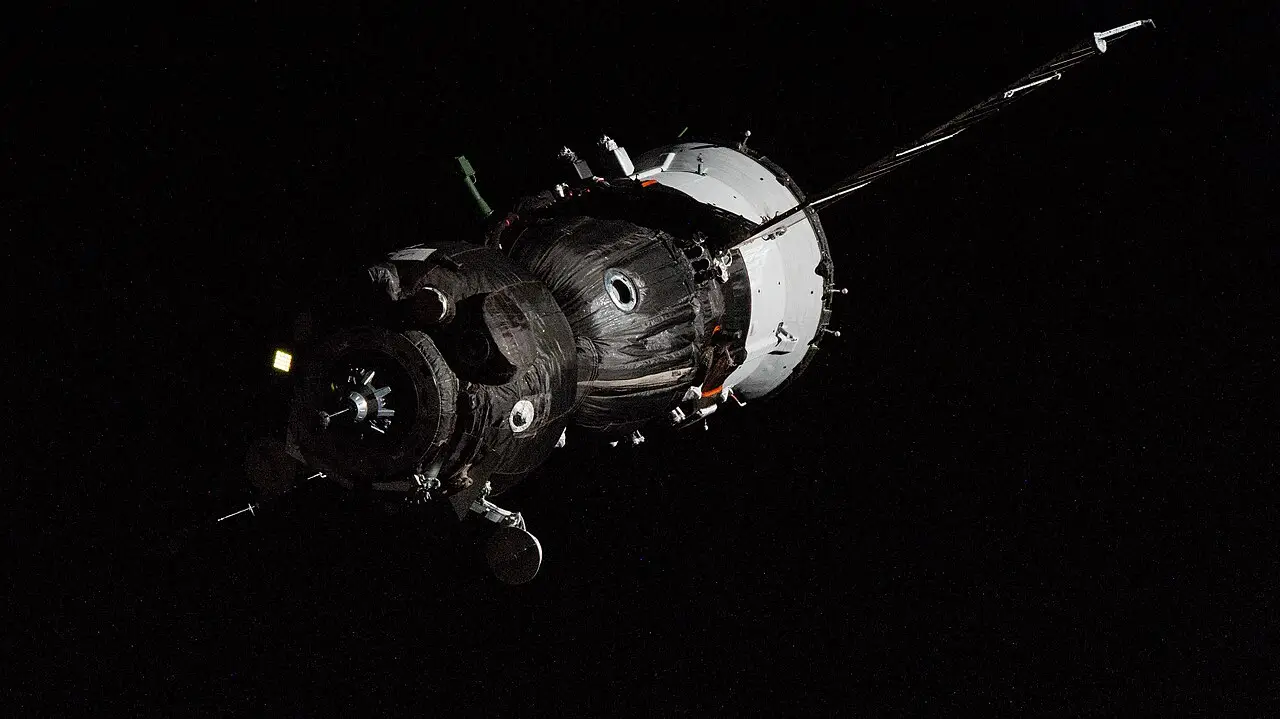
This is slightly more dangerous, and is undoubtedly a more uncomfortable experience for the astronauts on board, but as you can see in the vast difference in times it does make the whole process a lot quicker.
Based on the ISS altitude of around 420 km (261 miles), the Crew Dragon capsule would have to travel at 15 miles per hour to do the journey in 17 hours, whereas the Soyuz capsule would be at around 75 miles per hour.