• News
    • Tech News
    • AI
  • Gadgets
    • Apple
    • iPhone
  • Gaming
    • Playstation
    • Xbox
  • Science
    • News
    • Space
  • Streaming
    • Netflix
  • Vehicles
    • Car News
  • Social Media
    • WhatsApp
    • YouTube
  • Advertise
  • Terms
  • Privacy & Cookies
  • LADbible Group
  • LADbible
  • UNILAD
  • SPORTbible
  • GAMINGbible
  • Tyla
  • FOODbible
  • License Our Content
  • About Us & Contact
  • Jobs
  • Latest
  • Topics A-Z
  • Authors
Facebook
Instagram
X
TikTok
Snapchat
WhatsApp
Submit Your Content
NASA scientists have just a few months to examine asteroid after risk of collision with Earth doubles

Home> Science> Space> Nasa

Published 11:33 11 Feb 2025 GMT

NASA scientists have just a few months to examine asteroid after risk of collision with Earth doubles

It won't be long before 2024 YR4 disappears out of sight

Harry Boulton

Harry Boulton

google discoverFollow us on Google Discover

Risk appears to be increasing when it comes to an asteroid that could crash into Earth, as it's now understood that scientists at NASA now only have a few months to study it before it disappears out of sight.

This, combined with the chance of collision doubling, has began to worry many people, despite there still being a roughly 98% chance that 2024 YR4 soars safely past our planet as if nothing ever happened.

Discovered in December 2024, this particular asteroid is estimated to be on a course towards Earth, and is currently around 27 million miles away from Earth.
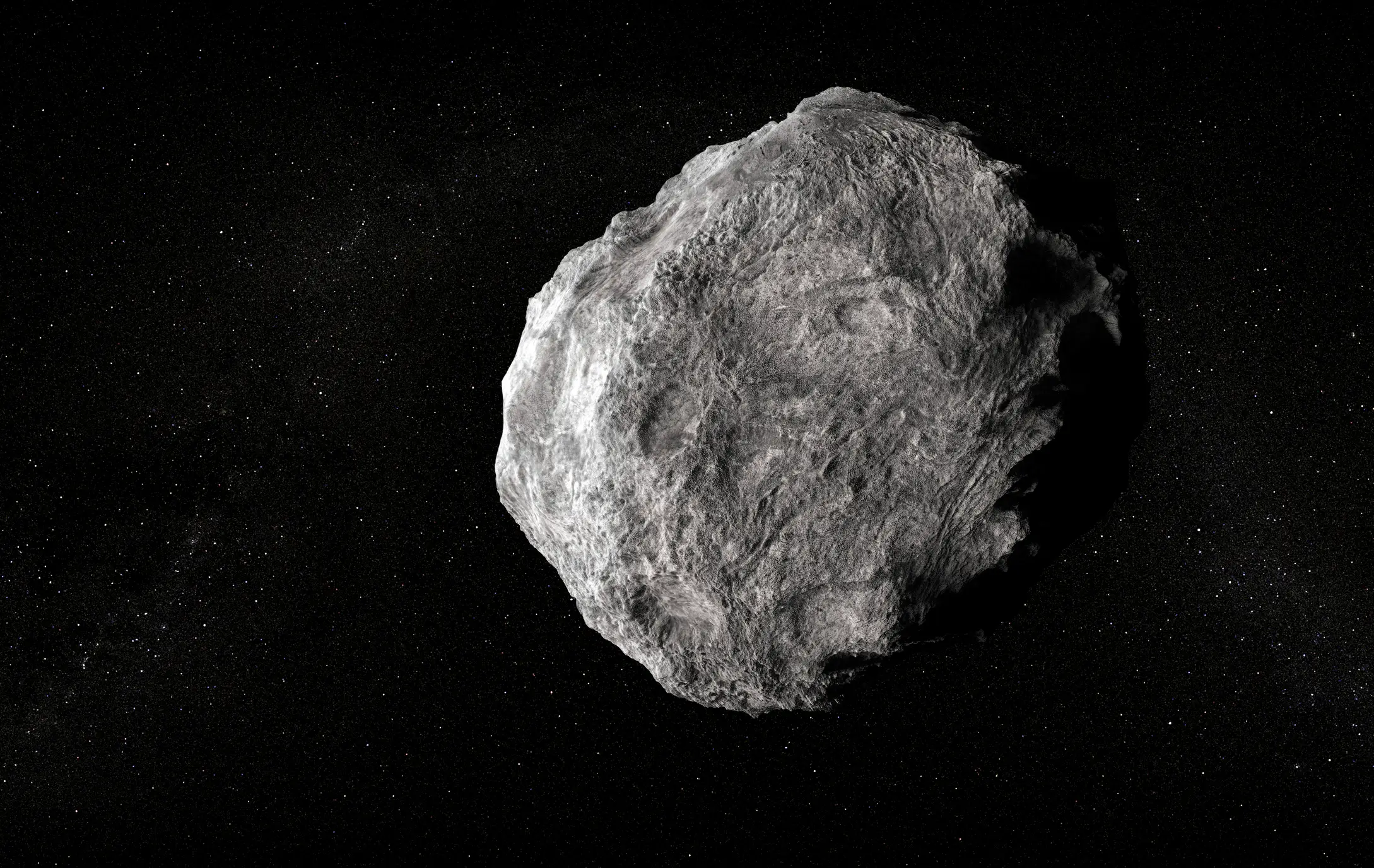
Scientists at NASA only have another couple of months to study 2024 YR4 before it disappears from view (Getty Stock)

Advert

At the moment, scientists indicate that the space rock is around 60 meters wide, and would be large enough to take out an entire city if it did happen to collide with our planet, so necessary preparations are already being considered.

One physicist has argued that this is a 'test' from the Universe to ensure that we're adequately able to respond to world-changing events like this, indicating that defensive measures would be worthwhile to build even if 2024 YR4 flies right past us.

Scientists over at NASA will likely have to make their mind up quickly though, as they only have a few more months now to study the asteroid before it disappears, resurfacing again only in 2028 as per the Independent.

One of the most important reasons why these scientists need as much time as possible is to properly calculate a wide variety of factors. Understanding the asteroid's trajectory, velocity, and size will help determine how likely it is to strike Earth and by what point, which will be vital in preparing for any potential impact.
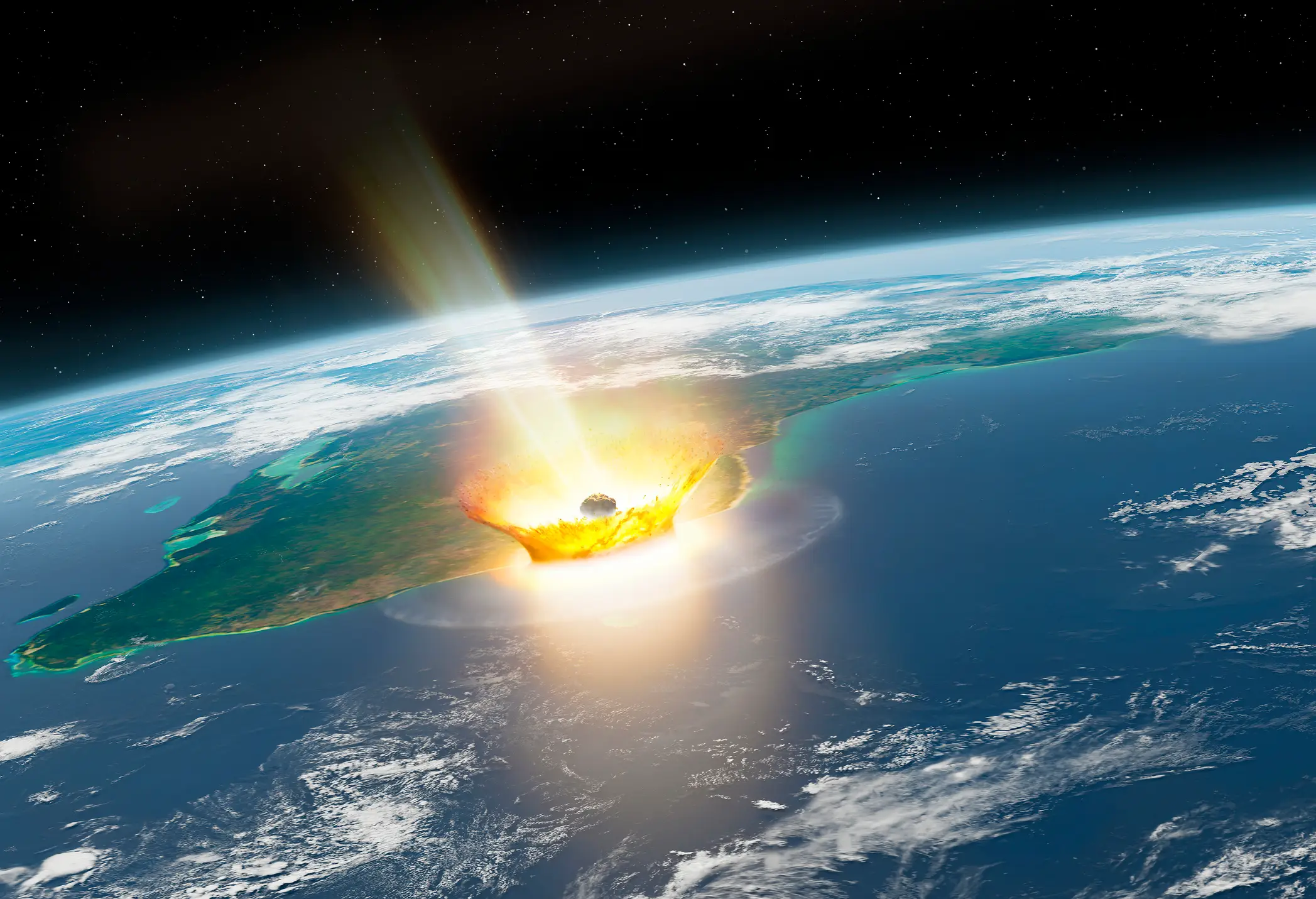
Getting a look at the asteroid will help determine its size, velocity, trajectory, and material form (Getty Stock)

NASA's James Webb Telescope is capable of looking at infrared light and heat that is emitted from 2024 YR4, allowing greater accuracy than light-based calculations would otherwise, as they very much depend on the reflective nature of the asteroid's outer structure.

Furthermore, the material structure of the asteroid will also play a major part in its impact, as explained by Catalina Sky Survey engineer David Rankin in an interview with Space:

"If [2024 YR4] is made of stony material, it could cause a significant air burst and fireball reaching the ground. If made of iron, it will punch right through the atmosphere with little trouble and make an impact crater."

This would dramatically affect how it strikes the point of impact, which is currently estimated to be somewhere between South America and sub-Saharan Africa.

Featured Image Credit: angel_nt / Getty
Space
Nasa
Earth

Advert

Advert

Advert

  • 1,300lb NASA satellite will crash into Earth today as space agency reveal risk it will hit humans
  • NASA issues update on 'city killer' asteroid after considering using nuclear weapons to destroy it
  • Scientists reveal the real age of the Earth as they admit they might've got it wrong
  • James Webb Telescope catches sight of ‘city killer’ asteroid that scientists feared could hit Earth

Choose your content:

13 hours ago
17 hours ago
a day ago
  • Joseph Prezioso/AFP via Getty Images
    13 hours ago

    Back-to-back snow storms set to hit millions of people as more blizzard warnings raised for this weekend

    Other parts of the US are facing tornado warnings

    Science
  • Grace Cary / Getty
    17 hours ago

    Health officials issue warning as common blood pressure medication is urgently recalled

    People have reported worrying symptoms including dizziness

    Science
  • Reflect Orbital
    a day ago

    Radical proposal could see 50,000 mirrors launched into orbit for ‘on-demand sunlight’

    People will be able to request light from a bright moon level to high noon

    Science
  • Narumon Bowonkitwanchai / Getty
    a day ago

    New study suggests true origins of Covid-19 might not be what we thought

    Many have speculated that the deadly virus originated in a lab

    Science