uniladtech homepage
  • News
    • Tech News
    • AI
  • Gadgets
    • Apple
    • iPhone
  • Gaming
    • Playstation
    • Xbox
  • Science
    • News
    • Space
  • Streaming
    • Netflix
  • Vehicles
    • Car News
  • Social Media
    • WhatsApp
    • YouTube
  • Advertise
  • Terms
  • Privacy & Cookies
  • LADbible Group
  • LADbible
  • UNILAD
  • SPORTbible
  • GAMINGbible
  • Tyla
  • FOODbible
  • License Our Content
  • About Us & Contact
  • Jobs
  • Latest
  • Archive
  • Topics A-Z
  • Authors
Facebook
Instagram
X
TikTok
Snapchat
WhatsApp
Submit Your Content
NASA analyst explains the real reason we have no actual photos of the Milky Way

Home>Science>Space
Published 12:29 11 Dec 2024 GMT

NASA analyst explains the real reason we have no actual photos of the Milky Way

The only photos we do have are illustrated

Rebekah Jordan

Rebekah Jordan

google discoverFollow us on Google Discover
Featured Image Credit: Shawn PNW/500px / NurPhoto/Contributor / Getty
Space
Science
Nasa

Advert

Advert

Advert

NASA has taken some incredible photos over its history, from pictures of planets, space missions and much more.

But one thing they’ve never managed to photograph is the Milky Way.

Former NASA analyst and science communicator Alexandra Doten took to TikTok to explain why the photographs we have of the large spiral galaxy aren't real.

Responding to the question "How do we take pictures of the Milky Way if we are in it?" Doten explained that we simply can't.

Advert

"Every full image you see of the Milky Way is an illustration," she said in the video.

"We cannot see the Milky Way like this, and I don't think humans ever will."
NASA/Unsplash
NASA/Unsplash

The reason is basically because we live inside the Milky Way, on the edge of one of its spiral arms.

To get an actual photo of the whole galaxy, we’d have to leave it entirely and we’re nowhere close to being able to do that.

According to NASA: "It takes 250 million years for our Sun and the solar system to go all the way around the center of the Milky Way.

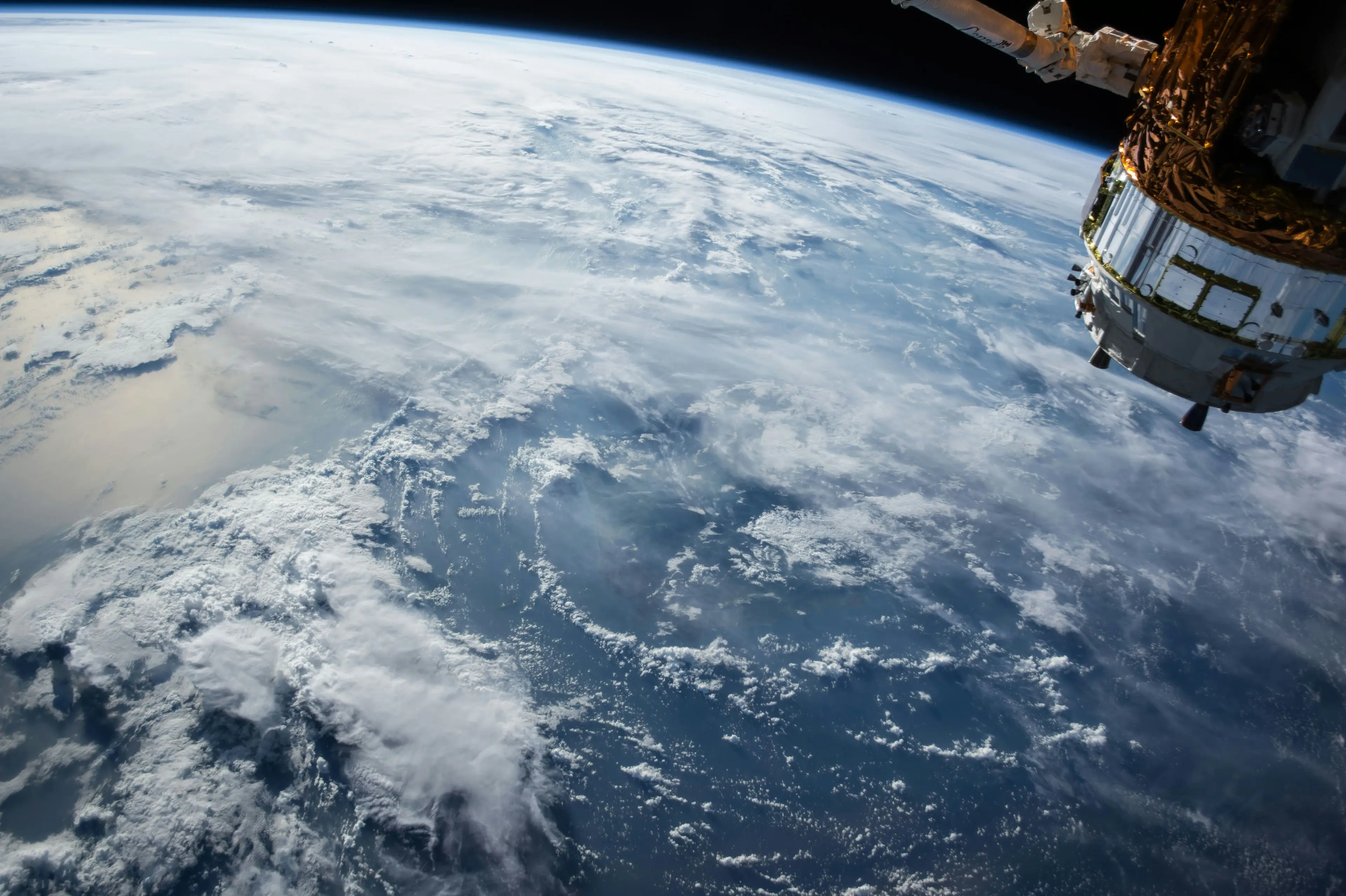
"We can only take pictures of the Milky Way from inside the galaxy, which means we don't have an image of the Milky Way as a whole".

For a long time, we knew the shape of the Earth by mapping the surface and measuring the Earth's gravity at different points.

NASA scientists were able to determine the shape of our planet and prove that it was spherical.

Then in 1972, the first image of Earth was captured when astronauts travelled far enough out into space to achieve such a view.

Astronaut Ron Evans or Harrison Schmitt took the famous 'Blue Marble' image while onboard Apollo 17, heading to the Moon.
 Dan Russo/Unsplash
Dan Russo/Unsplash

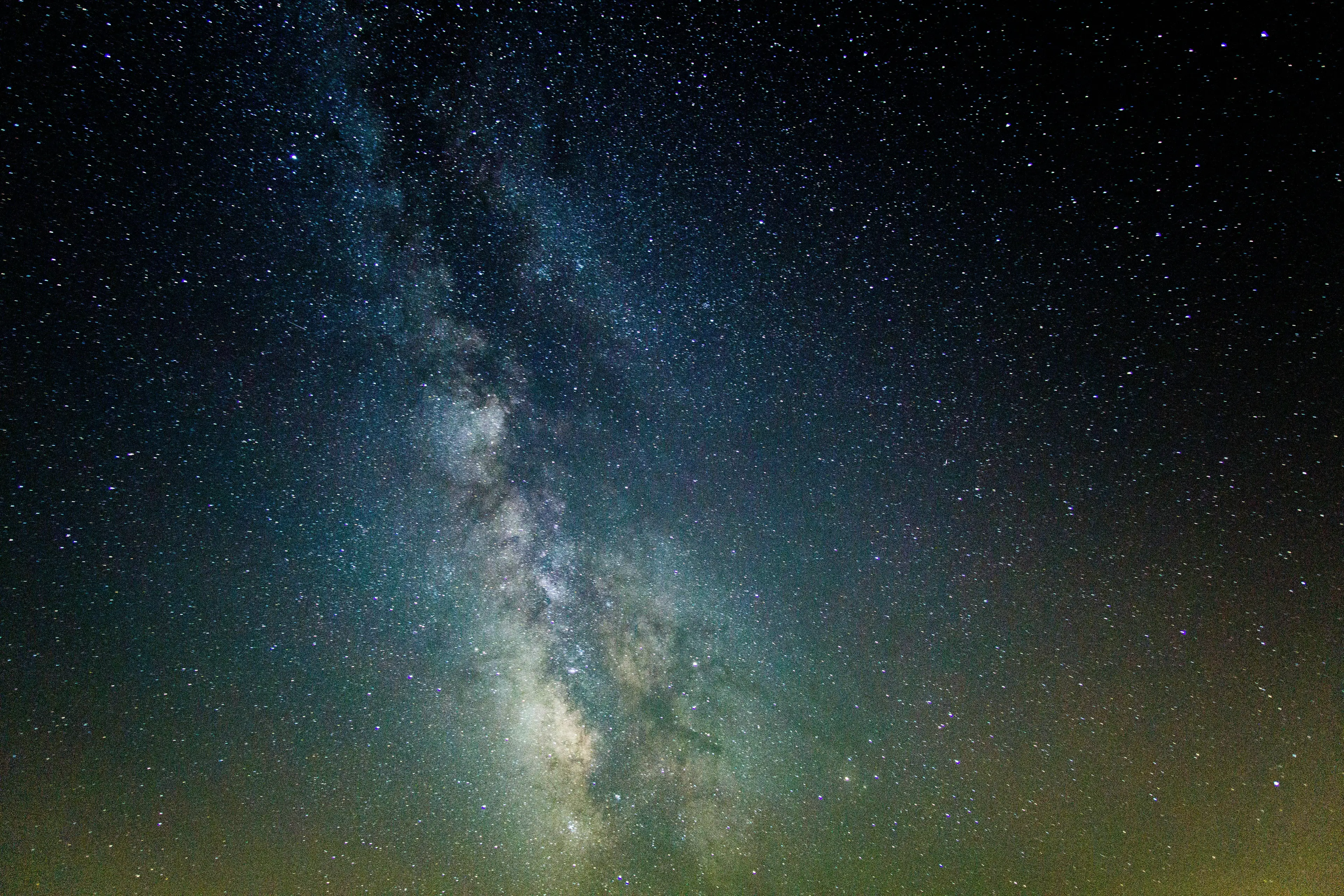
"To get [images of the Milky Way] a spacecraft would have to travel either up or down from the disk of the Milky Way, and travel so incredibly far," Doten explained.

But that doesn’t mean we’re totally in the dark about what the Milky Way looks like. When you look up at the night sky, most of the stars you see are part of our galaxy.

Scientists have been able to map these stars and piece together an idea of what the Milky Way looks like.

The TikToker compares it to creating an image of a Ferris wheel whilst you're riding on it.

You can’t see the whole thing at once, but with enough observations and mapping, you can figure out what it looks like.

Choose your content:

11 hours ago
a day ago
  • KTSDesign/SCIENCEPHOTOLIBRARY/Getty Images
    11 hours ago

    Scientists issue first update in 15 years on alien contact placing strict 'no reply' rule on all humans

    Experts warn how social media and AI could impact such an encounter

    Science
  • G. Ayala & M.E Viscarra/Wallace et al. 2026, Neotropical Biology and Conservation
    11 hours ago

    Rare photos of 'ghost dog' finally captured as scientists make phenomenal discovery

    The cameras captured over 594 photos of the species

    Science
  • Find Melissa Mondragon Casias / Facebook
    11 hours ago

    Ex-FBI agent claims 'voice-to-skull tech' could be behind string of missing scientists

    New suggestions hint towards cases of Havana Syndrome

    Science
  • David Merron Photography/Getty Images
    a day ago

    Scientists alarmed as Antarctica records ‘absolutely crazy’ winter temperatures 20°C above normal

    Melting ice in Antarctica could have a devastating impact globally

    Science
  • Why NASA’s Artemis 3 mission will no longer land on the Moon
  • NASA Commander breaks silence on all-male Artemis III crew outrage
  • Experts concerned over the fate of NASA as White House budget poses very real threat to science
  • NASA is using a sneaky legal loophole to quietly carve up real estate on the Moon