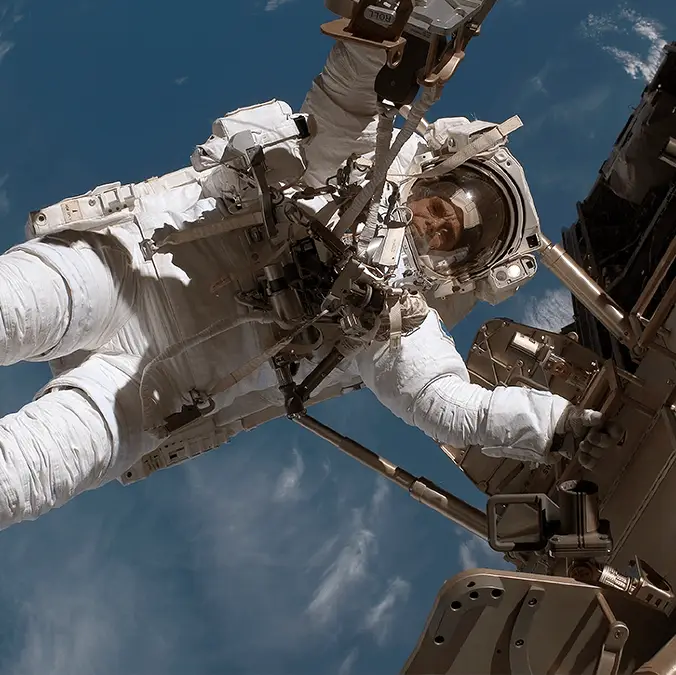
Featured Image Credit: NASA/Bryan Allen via Getty
The International Space Station's (ISS) time in space is coming to a close after nearly three decades in space, yet recent emergency evacuation fears prompted by a concerning air leak has left many wondering again when and how NASA's $1 billion destruction plan will take place.
Experts had been aware of an issue in the Zvezda service module's transfer tunnel for a while, yet things suddenly became dangerous when a 'save-haven' order was issued on Friday, June 5, relating to a potential air leak in the space station.
Russian cosmonauts attempted to fix the fracture that was identified, and NASA informed five members on board the ISS that a potential emergency evacuation was being prepared, yet thankfully everything was fine in the end and the astronauts were allowed to return to the station as normal.
While a major incident was avoided here, it has exposed once again the issues that have continued to plague the iconic space station for a while now, with cracks within the Zvezda module reportedly present for around six years.
Advert
Further questions have been prompted surrounding the inevitable decommissioning of the ISS after its lengthy presence in space, as NASA and the other participating agencies can't afford to deal with any more emergencies.
As reported by the Daily Mail, information revealed by Ryan Landon – Director of Operations at the NASA Johnson Space Center – has indicated that the International Space Station will begin its descent down to Earth at some point in 2028, although the process could continue all the way to 2031.
This procedure requires a complicated and controlled drop that will end in the legendary space station dropping down into a remote part of the Pacific Ocean, replaced afterwards by a commercial space station operated by private entities.
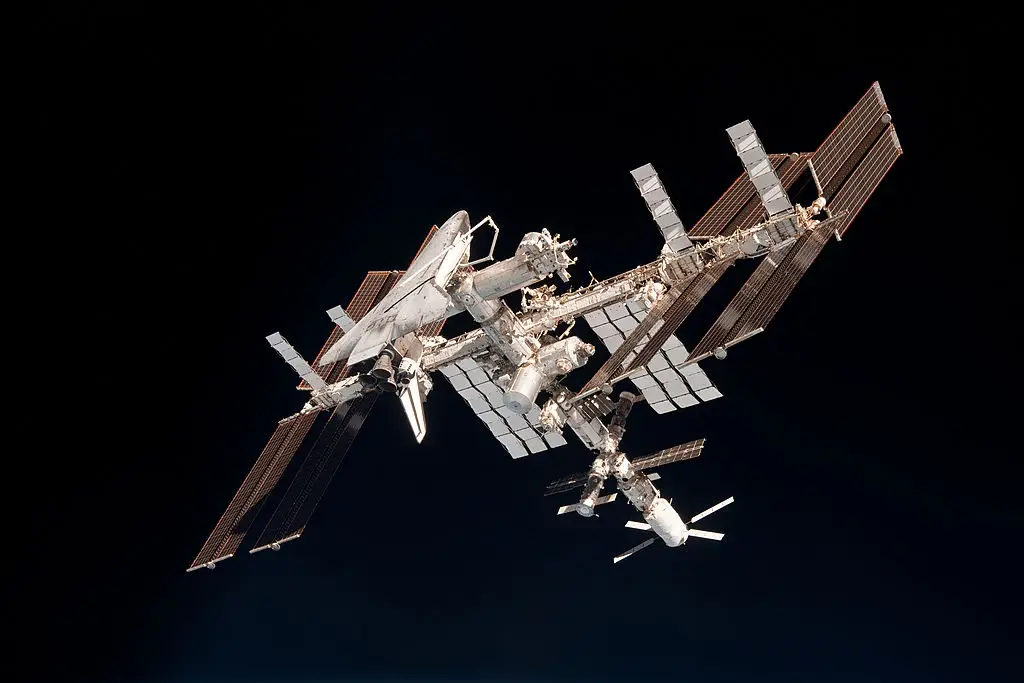
Speaking at the ASCEND 2026 aerospace conference, ISS acting director Jacob Keaton emphasized the importance and unique status of the space station since its launch.
"There's never been anything like it before," Keaton proclaimed. "Fifteen countries, five space agencies working together over the course of really 30-35 years."
Space veteran Captain Stephen Bowen also pointed out how the ISS has changed perceptions of space, noting:
"We've had people permanently living in space for 26 years. A third of the world's population doesn't known an Earth where everybody lives on it. Congratulations, guys, you made space boring. And we did, and that's a good thing [...] It became part of our natural fabric."
All this goes to show quite how much of an impact the International Space Station has had on our interaction with space over the last three decades, and its loss – while necessary – will be mourned.
As part of a plan worth over $1 billion in total, NASA intends to find a middle ground between continuing operations as normal and letting the ISS drop uncontrolled out of the sky, as the latter would be far too dangerous for an object that weighs 450,000 kilograms and measures roughly 109 meters end-to-end.
While most of the materials would be burned up by the friction caused during the re-entry process if left unchecked, NASA actually wants to preserve as much as possible to continue learning about life in space, so a supervised drop is necessary.
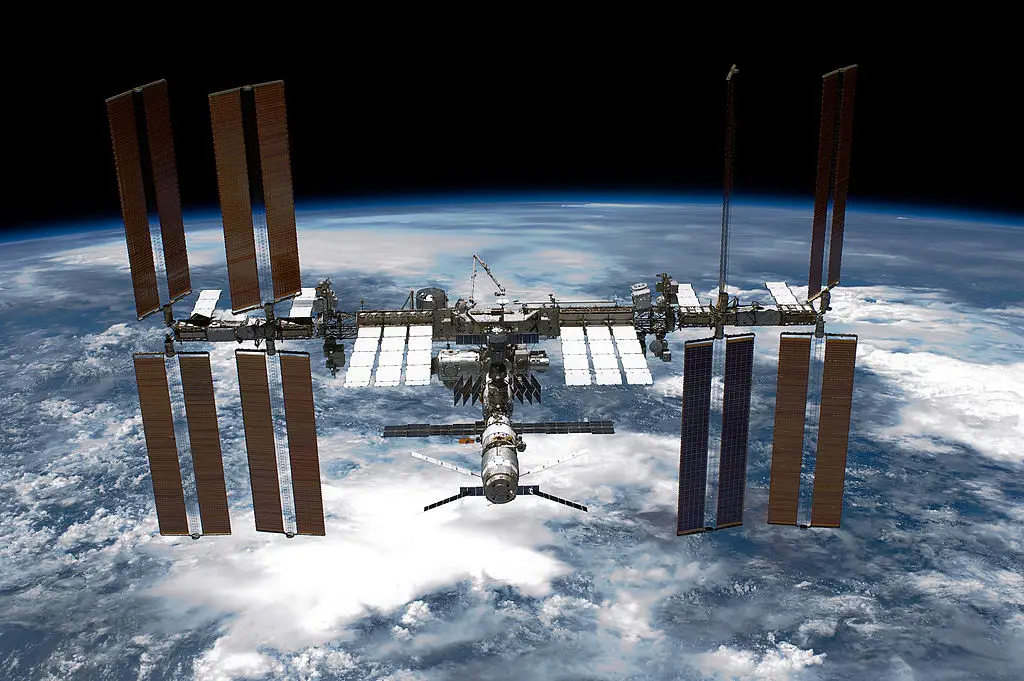
NASA's internal 'casualty risk limit' is around 1 in 10,000, and space debris expert Dr James Beck indicated to the Daily Mail that this is almost guaranteed to cause some debris to fall onto the ground in a way the space agency can't control.
"It should be expected that a few hundred objects which could cause casualties on the ground would be produced," the expert indicated, but what NASA can control, however, is where the ISS lands.
NASA will boost the station backwards at certain points to slow down its trajectory, ensuring that it lands in Point Nemo — a part of the Pacific Ocean referred to as 'Spaceship Graveyard'.
Elon Musk's private space agency SpaceX is operating a 'tugboat' that's vital to the procedure, as it provides the necessary thrust to change the ISS' speed, as it needs roughly six times the amount of propellant that the station can currently carry.