• News
    • Tech News
    • AI
  • Gadgets
    • Apple
    • iPhone
  • Gaming
    • Playstation
    • Xbox
  • Science
    • News
    • Space
  • Streaming
    • Netflix
  • Vehicles
    • Car News
  • Social Media
    • WhatsApp
    • YouTube
  • Advertise
  • Terms
  • Privacy & Cookies
  • LADbible Group
  • LADbible
  • UNILAD
  • SPORTbible
  • GAMINGbible
  • Tyla
  • FOODbible
  • License Our Content
  • About Us & Contact
  • Jobs
  • Latest
  • Topics A-Z
  • Authors
Facebook
Instagram
X
TikTok
Snapchat
WhatsApp
Submit Your Content
Extremely rare star explosion set to be visible from Earth this week

Home> Science> Space

Published 09:26 27 Mar 2025 GMT

Extremely rare star explosion set to be visible from Earth this week

Get ready for a night lights show you won't want to miss

Harry Boulton

Harry Boulton

google discoverFollow us on Google Discover
Featured Image Credit: MARK GARLICK/SCIENCE PHOTO LIBRARY / Getty
Space
Science
Earth

Advert

Advert

Advert

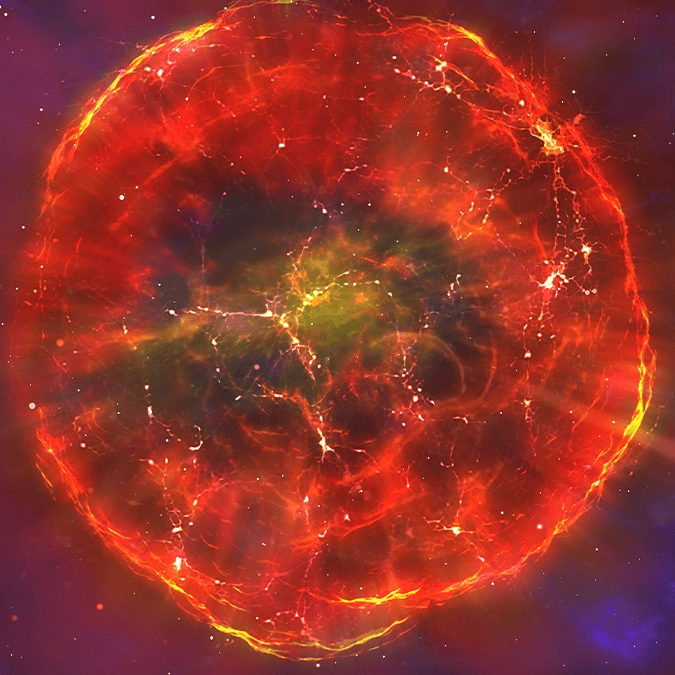
Anyone interested in stargazing should have their eyes keenly fixed on the sky this week, as there's a strong chance you'll be able to witness an extremely rare star explosion from the comfort of your own home.

While the night sky is certainly beautiful in its own right, certain uncommon events can make it an unmissable experience for a short period of time. solar eclipses, the Northern Lights, and even a shooting star are all events that'll leave anyone amazed, but this upcoming incident is something you should definitely pay attention to.

The sky can hold many treasures, and an extremely rare one might just be around the corner (Getty Stock)

As reported by Daily Galaxy, it could be as early as this week that we can see the extremely rare explosion of the Blaze Star, otherwise known as T Coronae Borealis inside the Northern Crown.

Advert

The exact date that it's explosion will become visible is currently unclear, as it could be any time in the next couple of months, but astrophysicist Jean Schneider at the Paris Observatory has predicted that it could fall on March 27, 2025.

While this unpredictability is understandably frustrating, the good thing about a star explosion like this is that it will last for at least a couple of days, so you don't have to worry about missing it overnight or when you're not looking.

It'll reach peak brightness for a couple of hours after the explosion begins, and then slowly fade back to it's typical visibility over the course of the next few days giving you plenty of chance to observe the amazing event yourself.

It's been 78 years since we last had a nova event in the Milky Way, and the staggering nature of the Blaze Star is that it's been over 3,000 years in the making.

Due to the fact that T Coronae Borealis is located around 3,000 light-years away from Earth, it takes an incredibly long time for the light to become visible to us on Earth. We're seeing it happen in 'real time' on Earth, but astrophysicists estimate that the explosion actually occurred at around 1,000 BCE, or in the Bronze Age.
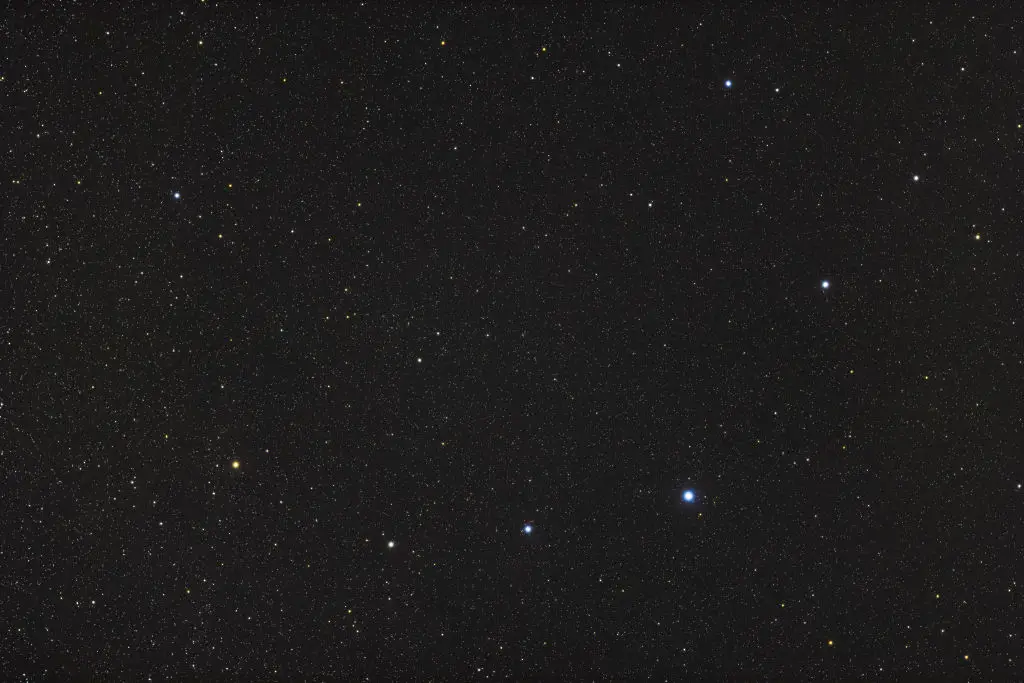
Finding the Northern Crown constellation is the key to spotting the Blaze Star once it explodes (Alan Dyer/VWPics/Universal Images Group via Getty Images)

If you're looking out for the Blaze Star, you'll first need to locate the Northern Crown. This is a C-shaped constellation that can be spotted if you look east before dawn now that we're in late spring.

Once the explosion occurs you'll notice that the Northern Crown has a new star among it - one that shines brighter than those around it - and that'll be the Blaze Star current exploding.

Right now you won't be able to see T Coronae Borealis as it has a brightness level of magnitude 10, whereas at it's peak following the explosion it'll reach magnitude 2, making it easy to spot in the night sky.

Choose your content:

15 hours ago
20 hours ago
21 hours ago
  • Sergey Mironov / Getty
    15 hours ago

    Huge differences between brains of people who exercise and those who don't revealed in new study

    The hidden mental health benefit of working out

    Science
  • salajean / Getty
    15 hours ago

    Scientists issue eerie warning following discovery of mutant killer superbug trapped in 5,000–year–old ice

    The frozen microbe is immune to multiple antibiotics

    Science
  • Win McNamee / Staff via Getty
    20 hours ago

    UFO expert warns Obama's 'alien confession' is preparing public for 'formal announcement'

    The former POTUS has given the conspiracy theorists plenty to talk about

    Science
  • Guido Mieth / Getty
    21 hours ago

    Doctor shares foolproof technique to get back to sleep when you wake up at 3am

    The expert suggests a simple bedtime hack

    Science
  • 'Once in a lifetime double comet' set to be visible from today in close approach to Earth
  • NASA simulation reveals horrifying way Earth could be 'ejected' from the solar system
  • How to see rare meteor shower as hundreds of fireballs are set to light up the sky this week
  • Map reveals cities most at risk from 1,100lb Soviet satellite travelling at 17,000mph towards Earth