uniladtech homepage
  • News
    • Tech News
    • AI
  • Gadgets
    • Apple
    • iPhone
  • Gaming
    • Playstation
    • Xbox
  • Science
    • News
    • Space
  • Streaming
    • Netflix
  • Vehicles
    • Car News
  • Social Media
    • WhatsApp
    • YouTube
  • Advertise
  • Terms
  • Privacy & Cookies
  • LADbible Group
  • LADbible
  • UNILAD
  • SPORTbible
  • GAMINGbible
  • Tyla
  • FOODbible
  • License Our Content
  • About Us & Contact
  • Jobs
  • Latest
  • Archive
  • Topics A-Z
  • Authors
Facebook
Instagram
X
TikTok
Snapchat
WhatsApp
Submit Your Content
Astronomers discover a possible 'future earth' 8,000,000,000 years into its future

Home>Science>Space
Published 10:19 30 Sep 2024 GMT+1

Astronomers discover a possible 'future earth' 8,000,000,000 years into its future

The planet gives us a rare glimpse to what Earth will look like billions of years from now

Rikki Loftus

Rikki Loftus

google discoverFollow us on Google Discover
Featured Image Credit: Roberto Machado Noa/dzika_mrowka/Getty Images
Space
Science
Earth
Climate change
Sun

Advert

Advert

Advert

Astronomers have discovered a possible ‘future earth’ eight billion years into the future.

The uncovering of a far-off planet has given us a glimpse of what Earth could look like billions of years from now.

The planet in question, which is around twice the size of Earth, is called KMT-2020-BLG-0414 and orbits a white dwarf star 4,000 light years away from our planet.
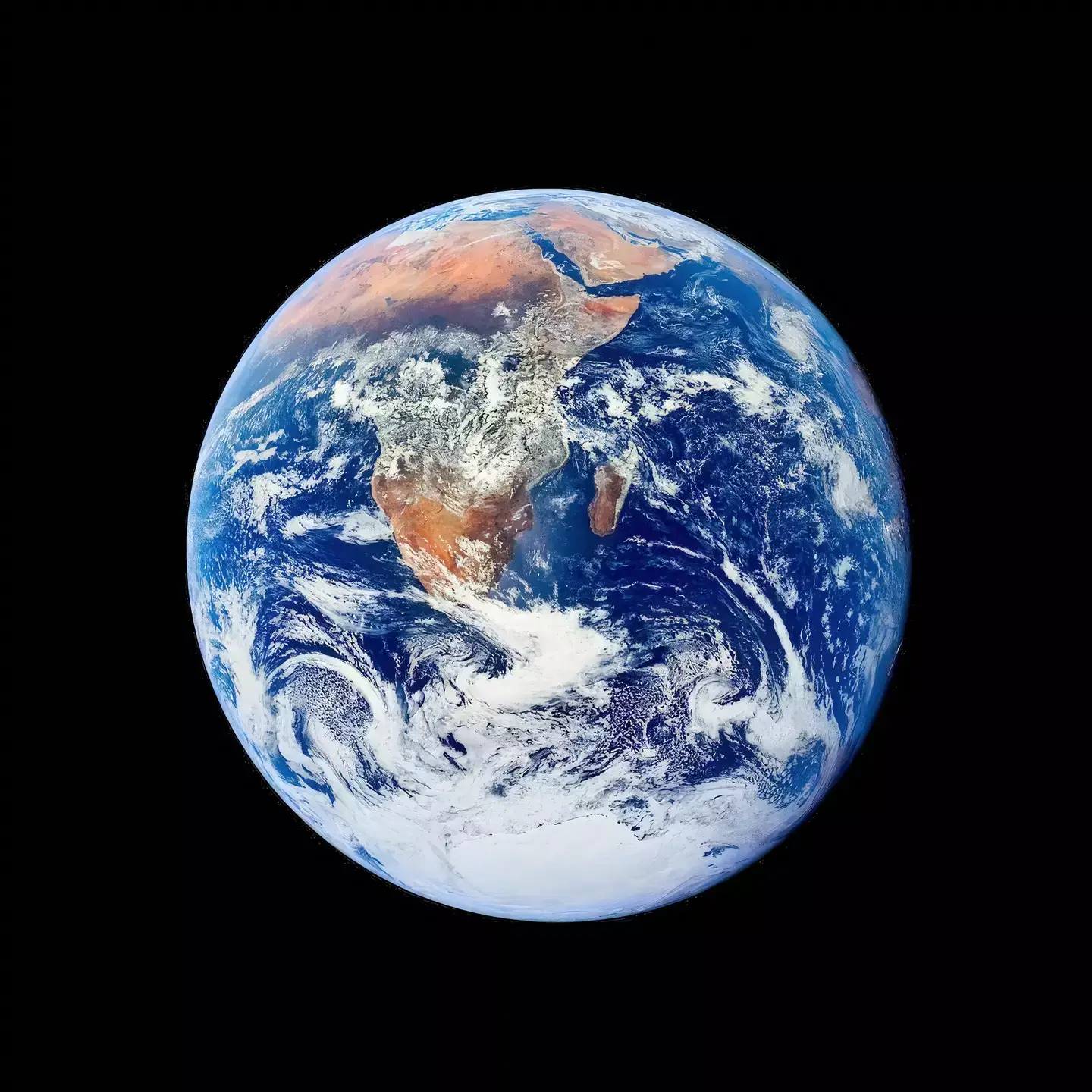
The world will look very different in the future (Roberto Machado Noa/Getty Images)

Advert

Earth could one day look very similar to this planet as our sun is predicted to turn into a white dwarf in five billion years.

Beforehand, the sun will turn into a red giant, which is one of the final stages of stellar evolution.

As a red giant, the sun will consume Mercury and Venus, and possibly Earth and Mars too.

However, if our planet survives then it’s likely that it’ll look a lot like the rocky planet in the distance.

In a statement, Keming Zhang, a lead author of the study and an astronomer at University of California San Diego, said: “We do not currently have a consensus whether Earth could avoid being engulfed by the red giant sun in 6 billion years.

“In any case, planet Earth will only be habitable for around another billion years, at which point Earth’s oceans would be vaporized by runaway greenhouse effect — long before the risk of getting swallowed by the red giant.”

The distant planet was first found by astronomers in 2020 near the center of the Milky Way.

It became visible when it moved in front of the light of an even further star 25,000 light years away.
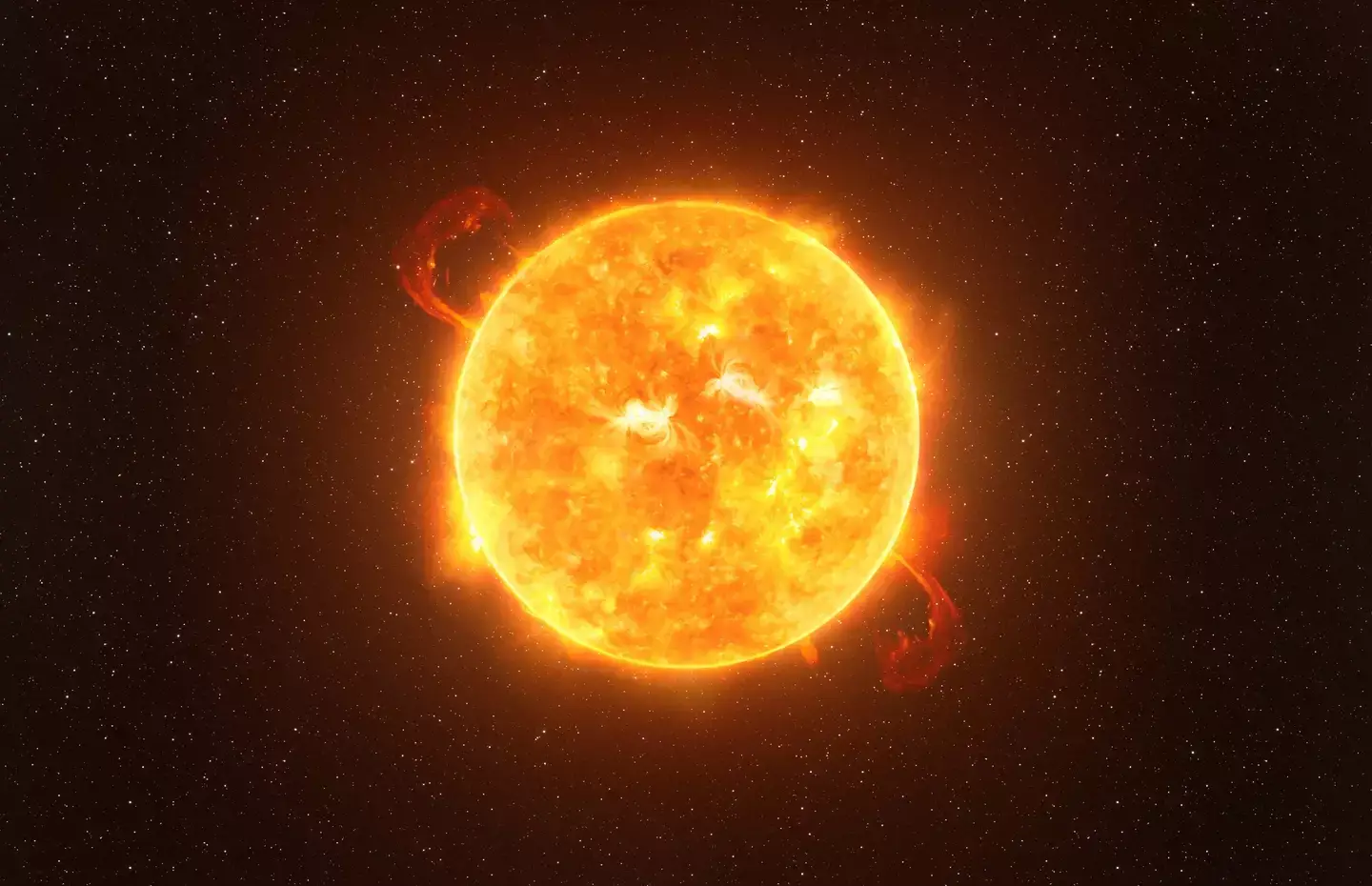
The sun will one day turn into a red giant (dzika_mrowka/Getty Images)

Zhang went on to add: “As the sun becomes a red giant, the habitable zone will move to around Jupiter and Saturn's orbit, and many of these moons will become ocean planets. I think, in that case, humanity could migrate out there.”

Scientists are still unsure as to whether humans would survive the red giant stage of the sun.

In fact, we might not even live to see it happen.

It’s thought that humans are likely to go extinct in the next billion years, unable to survive the global warming that will boil the oceans.

But if we somehow find a way to continue as a civilization, there might be hope for survival in other parts of our solar system.

The moons Europa and Enceladus orbit Jupiter and Saturn and their icy environment makes them inhabitable, but that could all change in the future.

When the sun becomes a red giant, they will turn into water worlds so, if we can reach them, humans might be able to turn them into new homes.

Choose your content:

a day ago
2 days ago
  • ISS / NASA
    a day ago

    ISS astronauts ordered to take shelter as they're put on 'evacuation alert' over 'air leaks'

    NASA has told astronauts to prepare for a potential evacuation

    Science
  • DrPixel/Getty Images
    a day ago

    UN warns AI will trigger a historic resource crisis for billions by 2030

    AI data centers could come with huge environmental costs

    Science
  • NASA / Handout via Getty
    a day ago

    Why NASA’s Artemis 3 mission will no longer land on the Moon

    NASA has changed the plans for its most important mission

    Science
  • SpaceX
    2 days ago

    Elon Musk hides apocalyptic 'extinction warning' inside official SpaceX legal documents

    We're long overdue for an event on a par with what wiped out the dinosaurs 66 million years ago

    Science
  • Terrifying El Nino detail hiding under the Pacific Ocean that has scientists declaring a ‘code red’
  • Major new UN report says the Amazon is about to enter a dangerous five-year dry spell
  • UN warns 91% probability the earth will cross a major climate threshold by 2030
  • Scientists sound the alarm on impending summer 'Super El Niño' that now has 80% chance of arrival