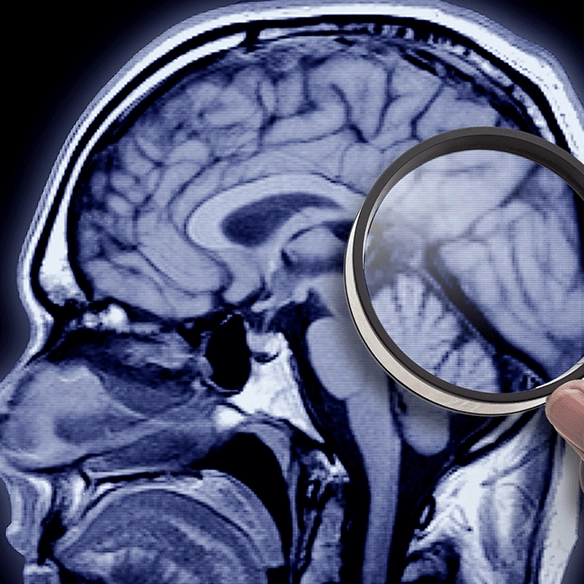
Scientists reveal why we forget some memories and remember others


It's a question that's baffled many a scientist: why does your brain retain some memories, but forgets others?
After all, we experience so much through life - but it seems like we only remember a small fraction of things.
Well, new research dives into a brain mechanism which essentially 'tags' a memory as important enough to be remembered.
Advert
Led by researchers at the NYU Grossman School of Medicine and newly published in the journal Science, the study looks at brain cells called neurons.
They transmit electrical signals that encode memories, often working in large groups and rhythmic cycles to encode complex information.
These are called 'sharp wave-ripples', and researchers looked at how they were fired in relation to certain memories.
They found that daytime events followed by five to 20 sharp wave-ripples were replayed more during sleep - meaning that they were consolidated into permanent memories by your brain.
So if something happened during the day and your brain didn't fire off many sharp wave-ripples - or any at all - chances are this wasn't going to become a long-lasting memory for you.
“Our study finds that sharp wave-ripples are the physiological mechanism used by the brain to ‘decide’ what to keep and what to discard,” said senior study author György Buzsáki, MD, PhD, the Biggs Professor of Neuroscience in the Department of Neuroscience and Physiology at NYU Langone Health.
It's fascinating stuff - it basically means that these ripples in your brain act as 'memory tags', which are then selected and replayed when you sleep, so they become permanent memories.
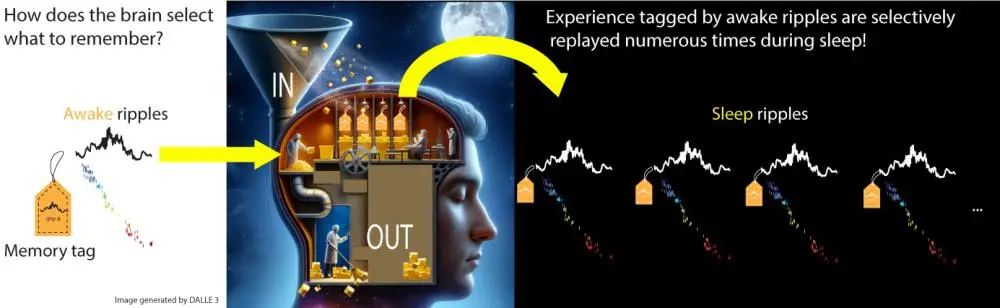
The study authors said your neurons fire at high speed as you sleep, "Playing back the recorded event thousands of times per night", so it's consolidated.
The research was done using mice who did successive maze runs with their brain activity tracked by electrodes.
This revealed what ripples were recorded when they first did the maze run, which were then replayed during sleep. Unsurprisingly, wave-ripples were most likely to be recorded when the mouse had a sugary treat after each maze run - and that was most likely to be replayed while the mouse slept.
And this is a really clever process from our brain - and one we don't have much control over.
"The brain decides on its own, rather than us deciding voluntarily," Buzsáki told NBC News.
If you did want to hack the system a bit, Buzsáki added: “If you watch a movie and would like to remember it, it’s better to go for a walk afterwards. No double features.”