• News
    • Tech News
    • AI
  • Gadgets
    • Apple
    • iPhone
  • Gaming
    • Playstation
    • Xbox
  • Science
    • News
    • Space
  • Streaming
    • Netflix
  • Vehicles
    • Car News
  • Social Media
    • WhatsApp
    • YouTube
  • Advertise
  • Terms
  • Privacy & Cookies
  • LADbible Group
  • LADbible
  • UNILAD
  • SPORTbible
  • GAMINGbible
  • Tyla
  • FOODbible
  • License Our Content
  • About Us & Contact
  • Jobs
  • Latest
  • Topics A-Z
  • Authors
Facebook
Instagram
X
TikTok
Snapchat
WhatsApp
Submit Your Content
New evidence suggests complex life could have begun 1,500,000,000 years before we originally thought

Home> Science

Published 09:42 1 Aug 2024 GMT+1

New evidence suggests complex life could have begun 1,500,000,000 years before we originally thought

Scientists have found signs of animal life as far back as 2.1 billion years ago

Rebekah Jordan

Rebekah Jordan

Featured Image Credit: Professor Abderrazzak El Albani of the University of Poitiers, France
Science
Earth
Discovery

Advert

Advert

Advert

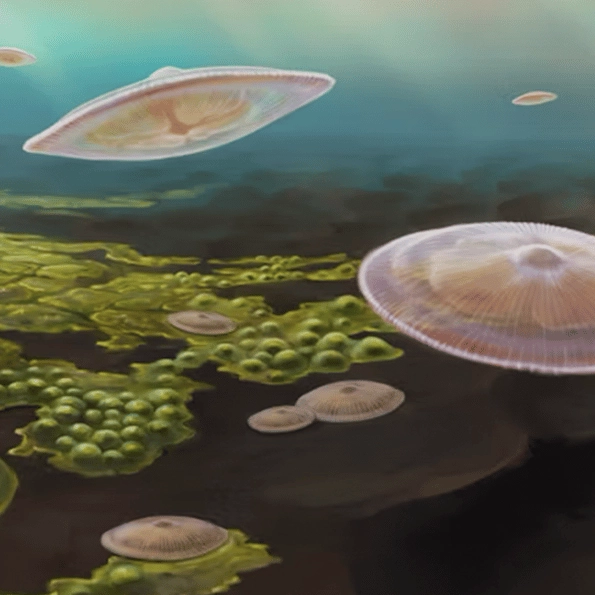
Most experts believe animal life began around 635 million years ago.

However, scientists have found evidence that suggests it may have started 1.5 billion years earlier.

The team working in Franceville, Gabon claims they’ve found signs of environmental conditions suitable for animal life as far back as 2.1 billion years ago.

The team, led by Professor Ernest Chi Fru from Cardiff University, found clues deep within rocks and suggested the organisms were restricted to an inland sea. This meant these life forms didn't spread globally and eventually became extinct.

Advert

The scientists looked for nutrients like oxygen and phosphorus in the rocks that could have supported life.
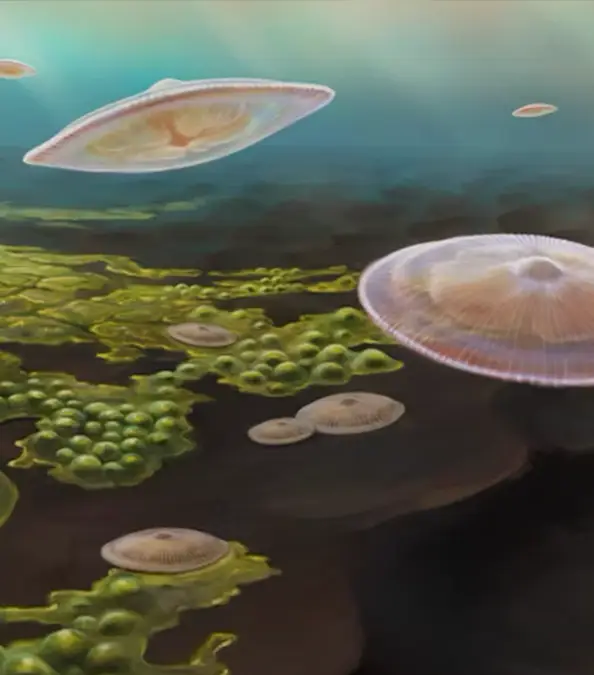
Professor Abderrazzak El Albani of the University of Poitiers, France

Chi Fru told BBC News that these early life forms might have been similar to slime moulds—simple, brainless organisms that reproduce through spores.

Not everyone is convinced, though.

Professor Graham Shields at University College London, who wasn't involved in the research said: 'I'm not against the idea that there were higher nutrients 2.1 billion years ago but I'm not convinced that this could lead to diversification to form complex life.'

Chi Fru believes his findings help clarify how life was created on Earth.

'We're saying, look, there's fossils here, there's oxygen, it's stimulated the appearance of the first complex living organisms,' he said.

'We see the same process as in the Cambrian period, 635 million years ago - it helps back that up. It helps us understand ultimately where we have all come from.'
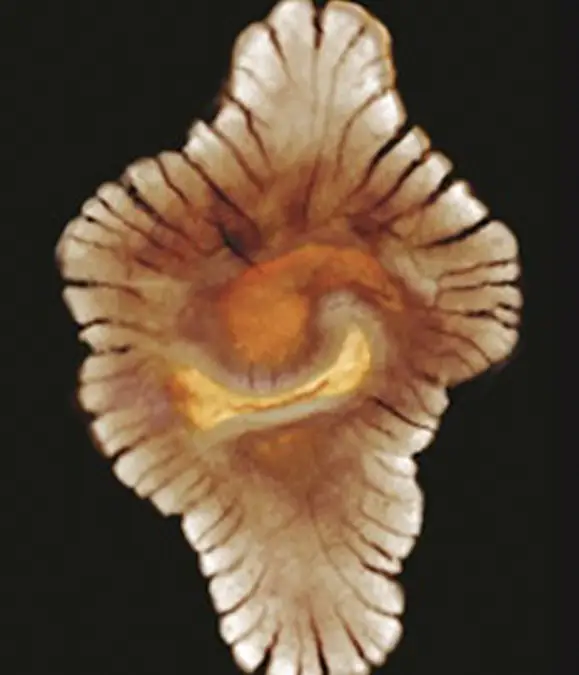
Professor Abderrazzak El Albani of the University of Poitiers, France

Chi Fru and his colleagues said the formation was made up of fossils which pointed to evidence of life that could 'wiggle' and move on its own.

For further evidence, the team analysed sediment cores drilled from the rock which showed a 'laboratory' for life.

They believe that the high levels of oxygen and phosphorus could have supported photosynthesis, providing the energy needed for more complex life forms to develop.

'This would have provided sufficient energy to promote increases in body size and greater complex behaviour observed in primitive, simple animal-like life forms such as those found in the fossils from this period,' he added.

But he says that the isolated environment also led to the downfall of these early life forms as they couldn't sustain a food supply.

Further research is needed to support the theories.

Choose your content:

an hour ago
2 days ago
  • BSIP / Contributor / Getty
    an hour ago

    Australian officials issue update amid outbreak of one of the 'deadliest viruses known to humans'

    Two cases have been reported so far

    Science
  • coldsnowstorm/Getty Images
    an hour ago

    Health officials issue warning to weight loss jab users over potentially fatal side effect

    Experts raise the alarm over a potentially fatal side effect with GLP-1 medication

    Science
  • Tom Werner / Getty
    2 days ago

    Man who did 300 kettlebell swings every day for 30 days reveals what it did to his body

    If this doesn't get you off the sofa, nothing will

    Science
  • NASA
    2 days ago

    NASA gives look into Orion's close quarters that will house astronauts around Moon and everyone has the same concern

    It's not exactly a five-star stay

    Science
  • Archaeologists uncover astonishing evidence of new human species living 2,500,000 years ago
  • Astronomers make groundbreaking discovery of planet hiding in our solar system with 'promising' evidence of life
  • Mystery of the Bermuda Triangle could finally be solved following years of conspiracy theories
  • Mammoth structures discovered beneath Africa could be 'ancient planet' 4,500,000,000 years old